Mini Tractor Implements Guide: Match 12-20 HP Tractors to Orchard and Greenhouse Work
A buyer who asks for a mini tractor often has a very practical problem: the farm is too narrow, too fragmented, or too labor-heavy for a larger tractor to work efficiently. The real question is not only “Which horsepower should I buy?” It is “Which mini tractor implements will do the jobs I need this season without making the tractor overloaded, unstable, or difficult to turn?”
This guide focuses on 12-20 HP mini tractors for orchards, greenhouses, vegetable beds, nurseries, small livestock farms, and light transport. It explains how to match common implements such as rotary tillers, plows, seeders, ridgers, fertilizer tools, small trailers, and mowing tools with real farm conditions. It is written for small farm owners, importers, distributors, and project buyers who want a clearer configuration before asking for a quotation.
Start with the farm work, not the attachment list
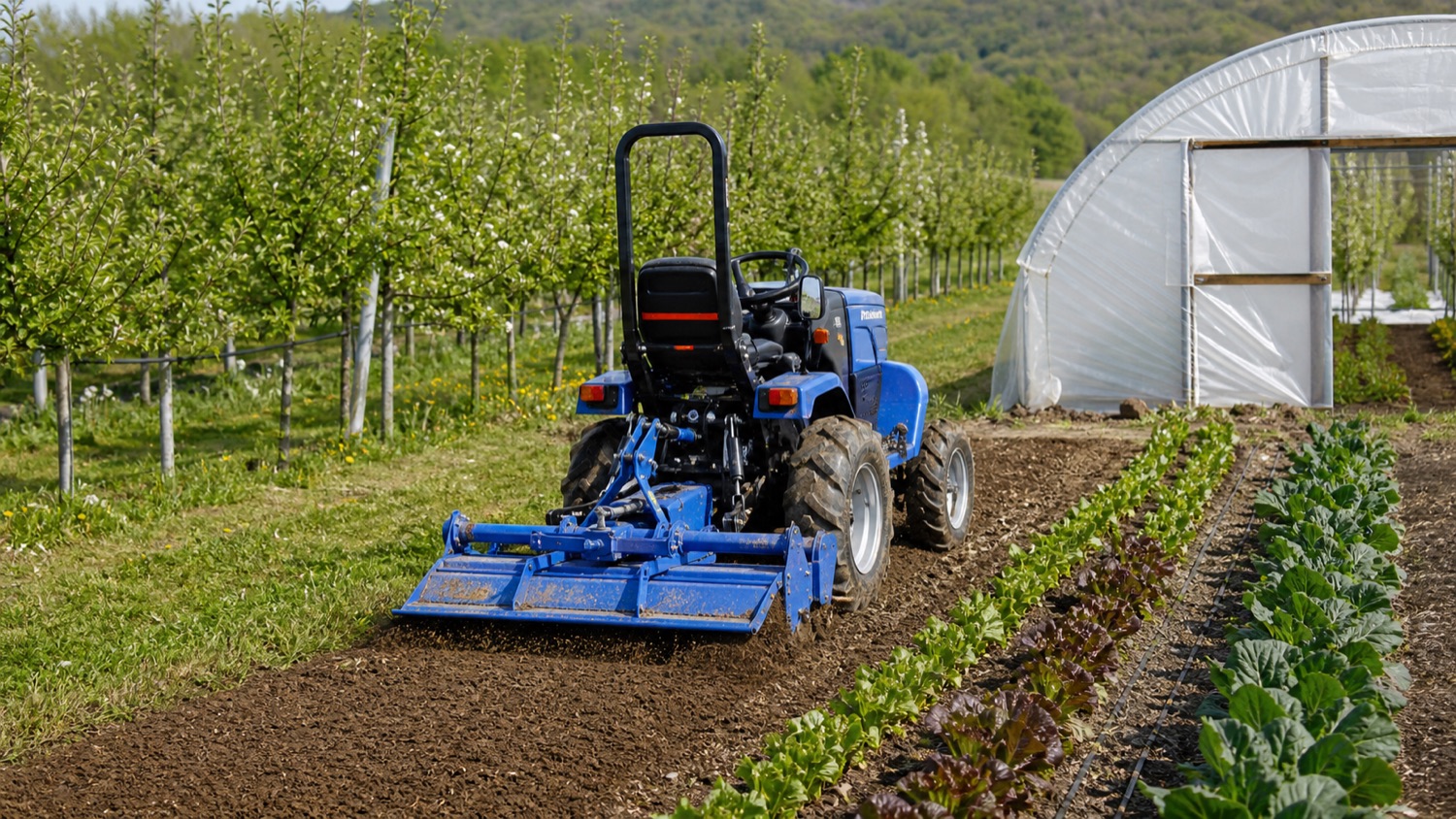
Many buyers begin with a long attachment list: rotary tiller, plow, trailer, seeder, sprayer, mower, ridger, and sometimes a small loader. That is understandable, but it can lead to the wrong configuration. A 12-20 HP mini tractor is built for compact work. It can be useful in tight spaces, but every implement adds width, traction demand, turning radius, and maintenance responsibility.
A better first step is to write down the farm tasks by season. Before planting, the tractor may prepare beds with a rotary tiller or light plow. During planting, it may support seeding, ridging, fertilizer application, or movement of seed and soil amendments. During the growing season, orchard and greenhouse users may need spraying support, mowing between rows, or light trailer transport. After harvest, the tractor may move crates, tools, feed, or small loads around the farm.
When the work list is clear, the implement decision becomes much easier. You can separate “must-have” implements from “nice-to-have” tools, avoid buying attachments that will sit unused, and choose a tractor model that fits the heaviest job rather than the easiest one.
Where Huaxiang mini tractors fit
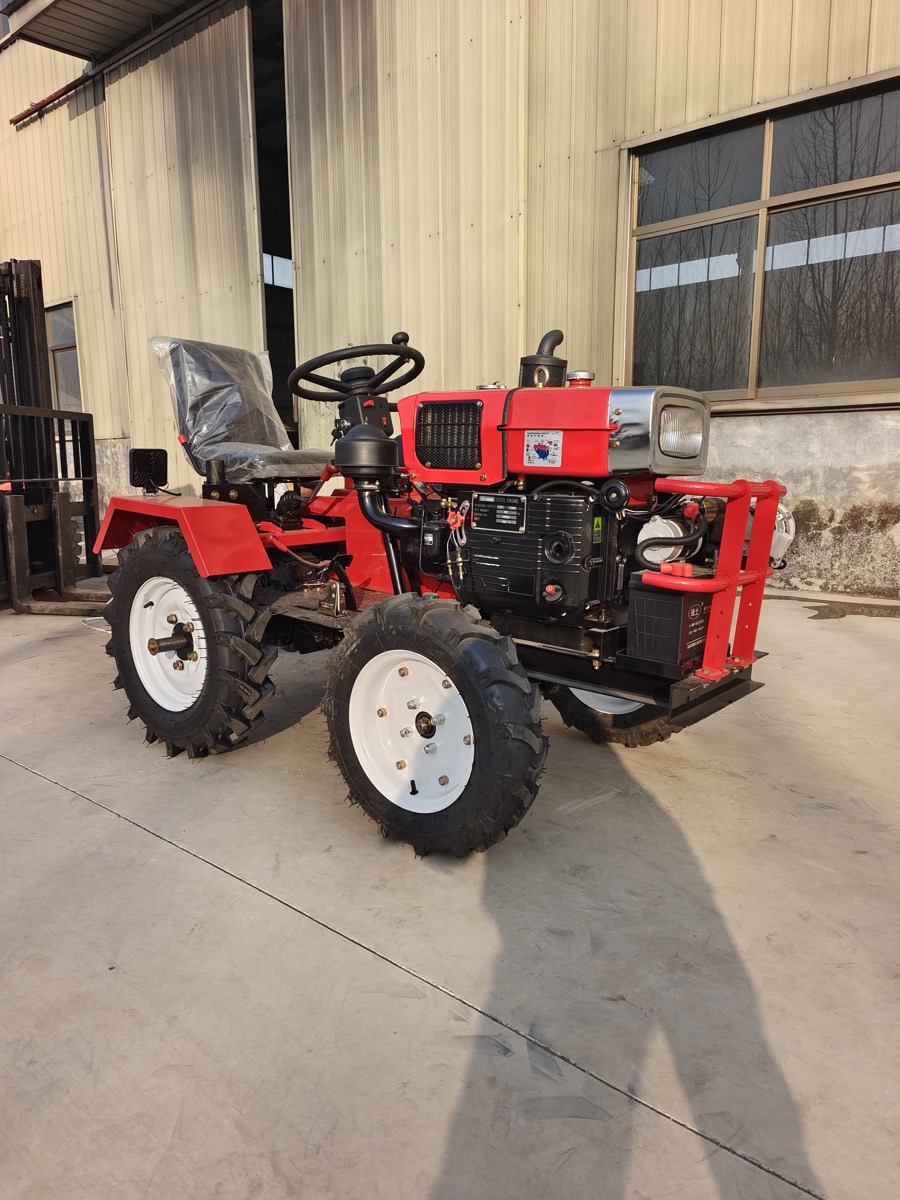
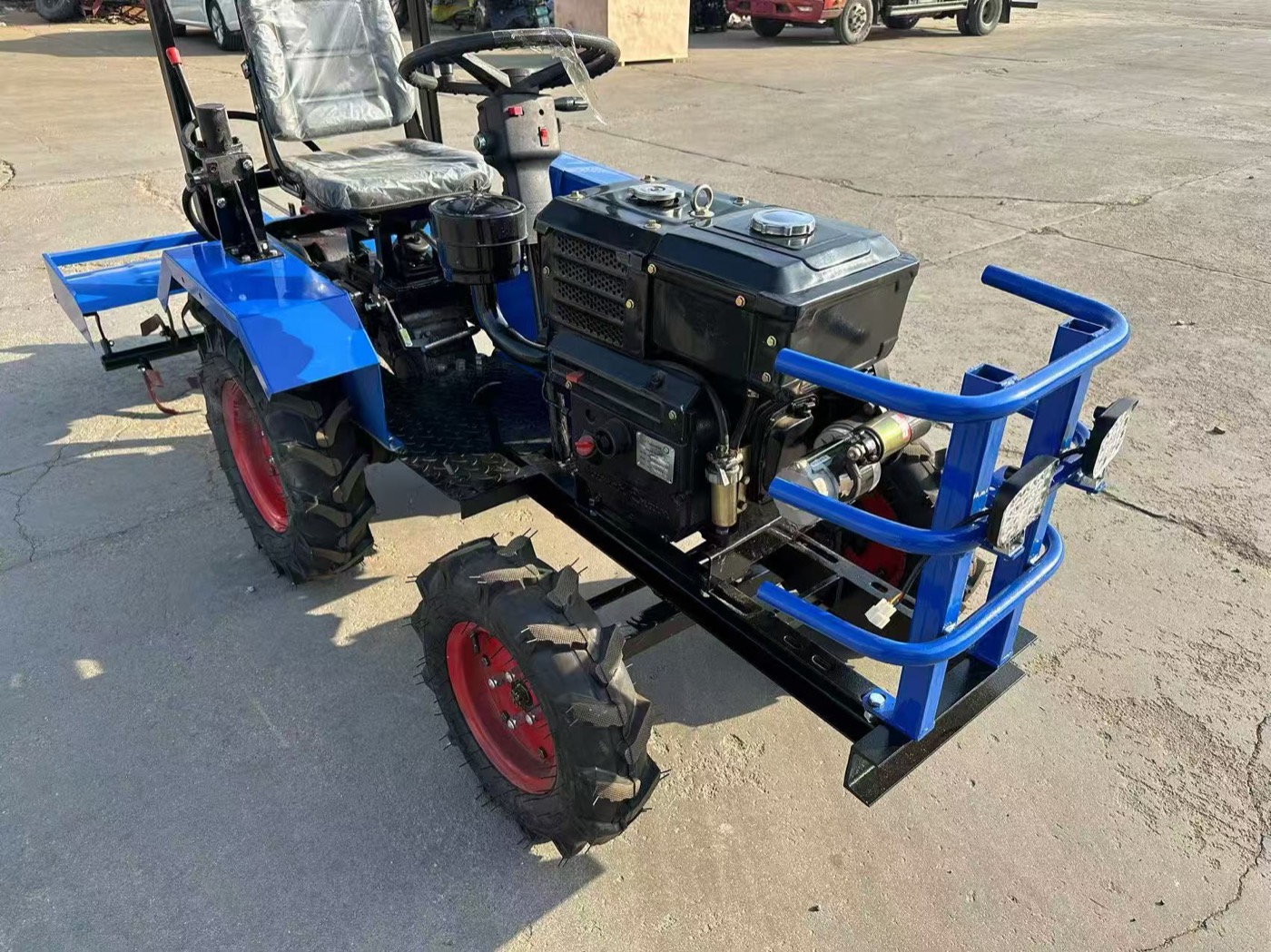
Huaxiang’s mini tractor range is designed for small plots, orchards, greenhouses, and flexible farm work. The official website lists Tracto mini12, Tractor mini15, Tracto mini18, and Tracto mini20. Local Huaxiang materials for the 12/15/18 HP mini tractor confirm a wheel tractor structure, single-cylinder diesel engine, 2WD drive, electric start, 6 forward and 1 reverse gears, belt drive, mechanical steering, 500 kg listed weight, and overall size of about 1.9 m × 1.0 m × 1.3 m.
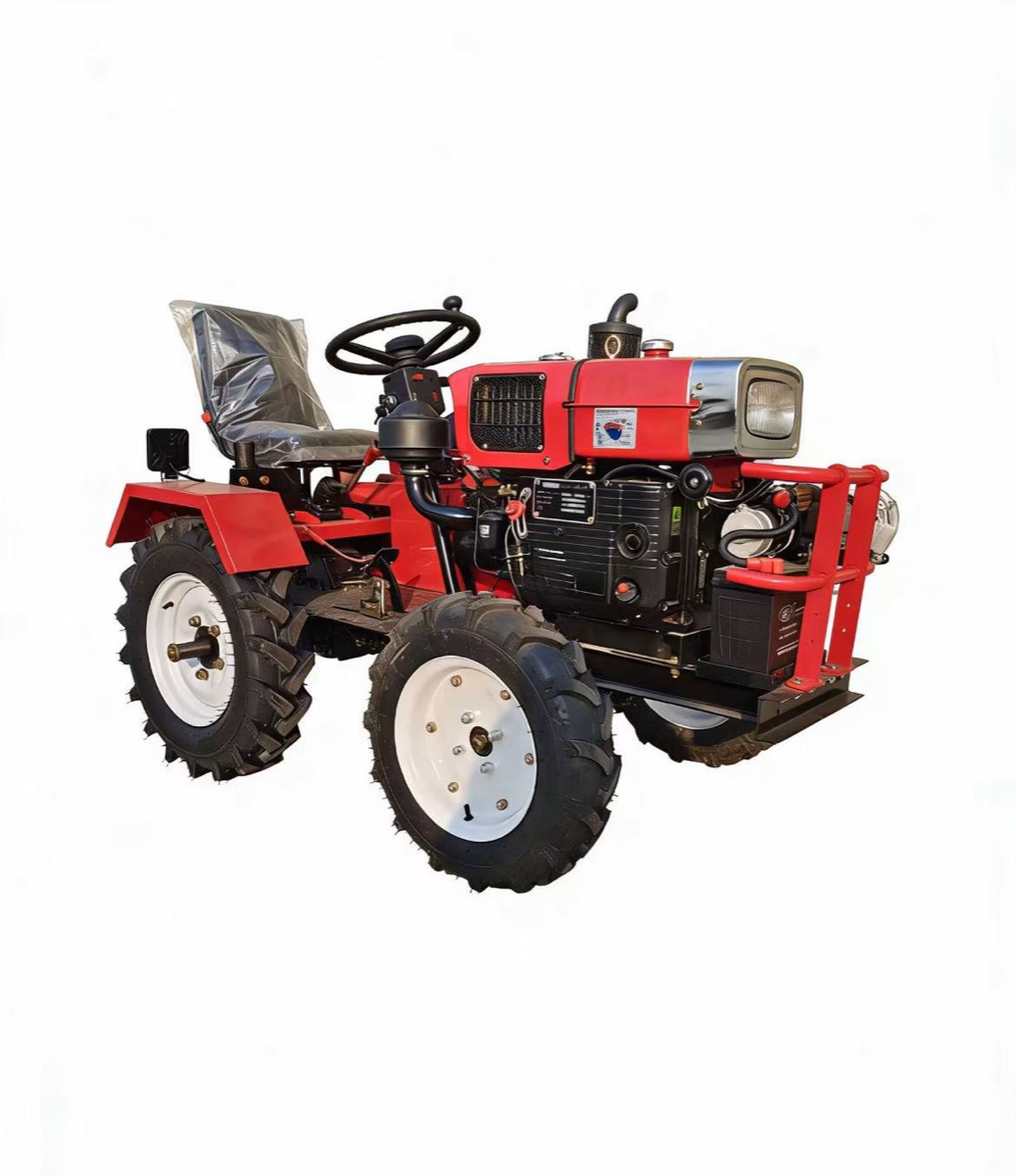
That specification range explains the correct use position: these are compact farm tractors for narrow access and light-to-medium small-farm work, not replacements for heavier 30-50 HP field tractors. If your market needs deeper tillage, larger plows, heavy trailer loads, or frequent wet-field traction, compare mini models with Huaxiang’s 30-50 HP TS tractor guide before deciding.
Match common implements to crops and spaces
The table below is a practical starting point. It does not replace a model-specific compatibility check, but it helps buyers ask better questions before ordering.
| Farm task | Common implement | Typical crop or scene | What to confirm |
|---|---|---|---|
| Bed preparation | Small rotary tiller | Vegetable beds, greenhouse soil, nursery plots | Working width, soil hardness, depth expectation, and whether the tractor has enough traction. |
| Light plowing | Small plow | Small grain plots, gardens, orchard edge land | Soil type, plow size, traction demand, and whether the work is occasional or daily. |
| Planting support | Seeder or ridger | Vegetables, maize rows, small farm crops | Row spacing, seedbed height, implement width, and turning area at row ends. |
| Growing-season care | Fertilizer tool, sprayer support, mower | Orchards, vineyards, nurseries, greenhouse surroundings | Row spacing, tree branch clearance, local sprayer type, and safe operating weight. |
| Farm transport | Small trailer | Fruit crates, vegetable harvest, feed, tools | Road condition, load size, brake requirements, slope, and local trailer regulations. |
The main lesson is simple: the implement width and field access often matter more than the implement name. A rotary tiller that works well in an open vegetable plot may be too wide for greenhouse aisles. A trailer that is fine on flat concrete may be unsafe on sloped orchard paths. A mower that works between tree rows may still need enough side clearance to avoid damaging branches or irrigation lines.
12 HP, 15 HP, 18 HP, or 20 HP: choose by the hardest job
For very small gardens, nursery beds, and light greenhouse access, a 12 HP mini tractor can be considered when the work is mainly light tillage and short transport. Buyers in this range usually care about compact size, simple operation, and whether the tractor can enter the work area without damaging crops or greenhouse structures.
A 15 HP model gives a little more working reserve while staying compact. It can make sense for vegetable growers and small mixed farms that need a tractor for regular soil preparation and farm transport but do not want a larger chassis. The decision should still be based on soil condition and implement width, not horsepower alone.
An 18 HP mini tractor is often more comfortable for buyers who expect more frequent rotary tillage, sowing support, and heavier daily use in small plots. Huaxiang’s website lists the Tracto mini18 for greenhouses, orchards, and small plots, with rotary tillage, trenching, and sowing mentioned as application areas.
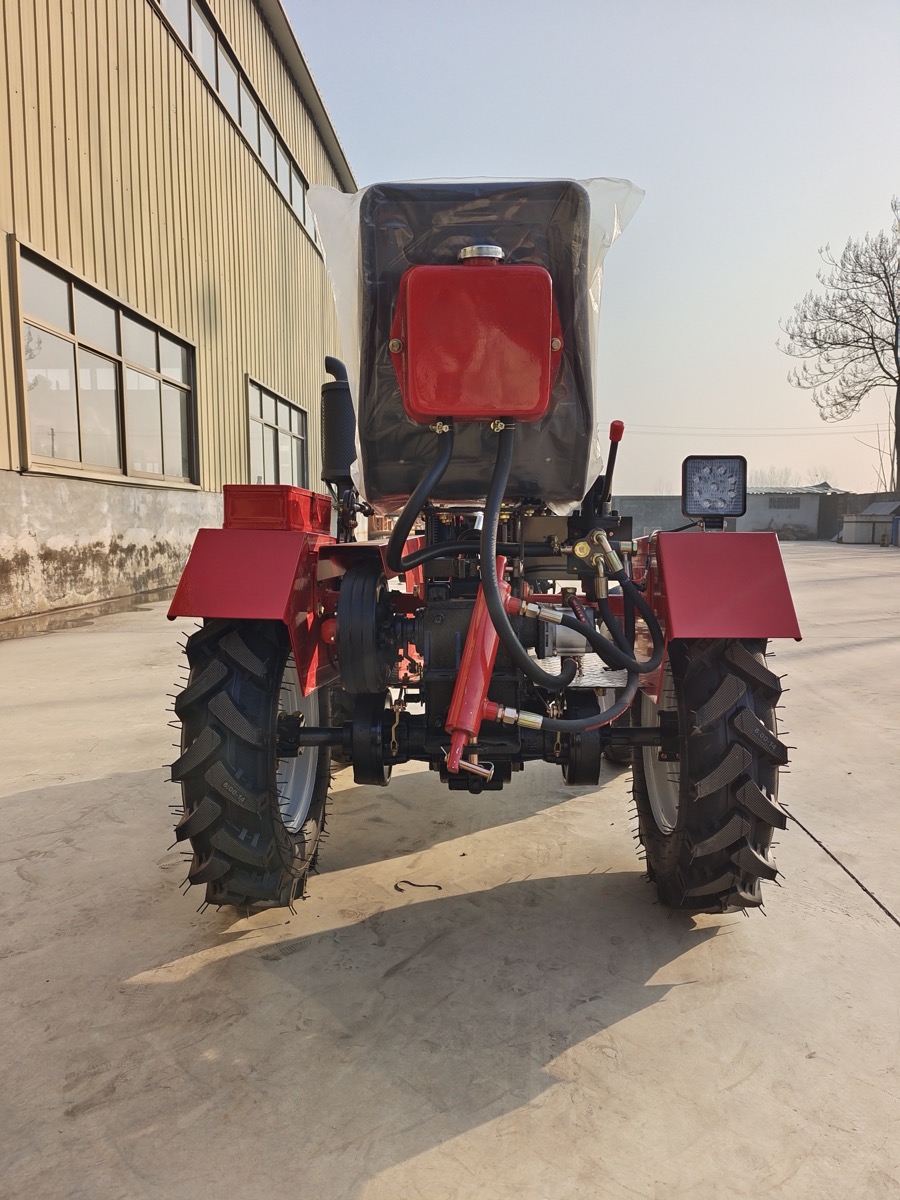
A 20 HP mini tractor can be considered when the buyer needs a stronger compact option for orchard, greenhouse, terraced field, and small plot operations. Huaxiang’s website mentions compact body, narrow wheelbase, and hydraulic lifting for the mini20. Buyers should still confirm the final hydraulic and implement interface before ordering, especially when the planned attachment package is more than one or two tools.
| Model range | Useful when | Be careful when |
|---|---|---|
| 12 HP | The work is light, space is narrow, and transport loads are small. | The buyer expects deep tillage, heavy plowing, or frequent loaded trailer work. |
| 15 HP | The farm needs a compact tractor for routine vegetable beds and small farm movement. | Soil is hard, row ends are tight, or the implement package is too wide. |
| 18 HP | The buyer wants more reserve for rotary tillage, sowing support, and regular small-plot work. | The tractor will be asked to perform tasks better suited to a 30 HP or larger machine. |
| 20 HP | The market wants a stronger compact tractor for orchards, greenhouses, terraces, and small plots. | The buyer assumes every implement will fit without checking hitch, lifting, weight, and width. |
Greenhouse and orchard buyers should measure before ordering
Mini tractors are attractive because they can enter places larger tractors cannot. But that advantage disappears if buyers do not measure the site. For greenhouse work, measure the door height and width, aisle width, turning area, bed spacing, and the height of pipes, frames, or hanging systems. If the tractor fits but the implement does not, the configuration still fails.
For orchards and vineyards, measure row spacing, branch height, slope, irrigation pipe location, and headland turning space. A compact tractor may enter the row, but a wide tiller, trailer, or mower can still damage trees, fruit, trellis posts, or irrigation tubes. If the orchard has soft soil after rain, tire choice and traction should be discussed before confirming the order.
For vegetable farms, bed width and soil preparation depth are the key questions. A mini tractor is often used because it reduces hand labor, but it should not be forced into heavy primary tillage if the soil is compacted and the implement is too aggressive. In that situation, buyers may need staged soil preparation, a smaller working width, or a larger tractor class.
Distributor notes: sell a working package, not just a tractor
For distributors, mini tractor sales usually become stronger when the sales team can explain complete working packages. A farmer does not only want a machine; the farmer wants beds prepared, rows planted, weeds managed, and harvest moved. A practical mini tractor package might include the tractor, one soil-preparation implement, one crop-row implement, and one small transport solution.
However, package selling also increases the risk of mismatch. Before ordering several units, distributors should confirm the local crops, common farm size, average row spacing, soil hardness, most requested implements, and after-sales parts demand. It is also wise to prepare simple sales questions for local dealers: What is the buyer’s land area? What crops are grown? Which job is hardest? Is the land flat or sloped? Will the tractor enter greenhouses, orchards, or open plots?
Another important point is training. If the buyer has only used hand tools or walk-behind machines, explain daily checks, belt drive care, tire pressure, lubrication points, safe turning, and implement connection basics. Good pre-sale explanation reduces complaints that are really caused by unsuitable implement selection or unrealistic workload expectations.
Common mistakes when choosing mini tractor implements
- Buying too many implements at once: Start with the jobs that happen every season. Add secondary implements after confirming real use.
- Ignoring working width: A compact tractor can still become useless in a greenhouse if the attachment is too wide.
- Comparing only horsepower: Soil condition, traction, gear selection, tire size, and implement load can matter more than a small horsepower difference.
- Overloading transport work: A small trailer is useful, but slope, road condition, and braking requirements must be checked.
- Skipping spare parts planning: Distributors should prepare routine parts for the tractor and the most common implements in their market.
- Assuming one package fits every crop: Orchard, greenhouse, nursery, vegetable, and livestock support work can require different implement priorities.
How to request a useful mini tractor quotation
A vague request such as “send mini tractor price” often leads to a vague answer. A better inquiry gives enough field information for a configuration recommendation. Before contacting Huaxiang, prepare these details:
- Target horsepower: 12, 15, 18, or 20 HP.
- Main crops: vegetables, orchard fruit, greenhouse crops, nursery plants, livestock support, or mixed small farm use.
- Top three jobs: rotary tillage, plowing, seeding, ridging, mowing, spraying support, trailer transport, or fertilizer work.
- Field condition: dry soil, soft soil, slope, greenhouse aisle, orchard row, terrace, or small courtyard road.
- Access size: row spacing, door width, turning space, and planned implement working width.
- Destination market, documentation needs, and whether OEM/ODM appearance or packaging support is required.
Huaxiang’s broader wheeled tractor range includes mini tractors and TS/TYE/Ningbo series tractors. If the mini tractor workload looks too heavy, compare the work requirement with a larger wheeled tractor before confirming the final package.
FAQ: mini tractor implements
What implements can a mini tractor use?
Common discussions include small rotary tillers, light plows, seeders, ridgers, fertilizer tools, mowing tools, sprayer support, and small trailers. The final choice must be confirmed by tractor model, working width, hitch or lifting setup, soil condition, and local safety requirements.
Is a 12 HP mini tractor enough for a small farm?
It can be enough for light garden, greenhouse, nursery, or small-plot work when the soil is not too hard and the implement is properly sized. If the buyer expects frequent deep tillage or heavy trailer work, compare 15, 18, 20 HP, or a larger tractor class.
Which mini tractor is better for orchard rows?
Measure row spacing, branch clearance, turning space, slope, and irrigation pipe position first. Then choose horsepower and implement width. A compact tractor is helpful, but a poorly matched attachment can still damage the orchard.
Can a mini tractor work inside a greenhouse?
Yes, when the tractor and implement fit the door, aisle, bed layout, and turning area. Buyers should confirm dimensions before ordering because a tractor that fits without an implement may not fit after a tiller, ridger, or trailer is attached.
What should distributors check before ordering mini tractors with implements?
Check local crop types, common row spacing, soil condition, most requested implements, spare parts demand, documentation needs, and whether the package can be explained clearly by the dealer team.
Need a mini tractor configuration? Review Huaxiang’s mini tractor buying guide, compare the product pages, or contact Huaxiang with your horsepower range, crops, field size, row spacing, implement list, destination port, and estimated order quantity.